Borobudur and Prambanan in One Day: A Realistic Itinerary (Timing, Tickets & Transport)
Can you see both temples in one day without running from one queue to the next? Yes — if you treat the day as two shifts, plan the rest in between, and book the transport before anything else.
Borobudur and Prambanan sit on opposite sides of Yogyakarta. Put them in one day and you get two very different temples, two different light conditions, and one long but manageable day — provided you build in a rest and do not try to add a third stop.
This guide is about the logistics: how the day actually works, which tickets are separate, why a private car makes sense, and who should split the two temples across two days instead. It also explains why a package can be safer than chasing limited official inventory. If you want the broader three-day plan, read the Yogyakarta 3-day itinerary.
Can you visit Borobudur and Prambanan in one day?
Yes. The two sites are roughly 1.5 to 2 hours apart by road, depending on traffic and your exact starting point. The mistake is treating them as one continuous sightseeing block. They are better as two shifts: a pre-dawn visit to Borobudur and a late-afternoon visit to Prambanan, with several hours of rest in between.
That gap is not wasted time. It is what makes the evening enjoyable. Without it, you arrive at Prambanan already tired, walk the complex in the heat, and sit through a 90-minute performance with no energy left.
| Time | What happens | Why it matters |
|---|---|---|
| 03:30 | Hotel pickup | You need to be at Borobudur before first light; traffic is light at this hour. |
| 05:00–07:00 | Borobudur sunrise | Quiet grounds, soft light, cooler air; access rules can change. |
| 07:00–08:30 | Breakfast and return | Eat near Borobudur or back in the city; traffic builds after 08:00. |
| 09:00–14:30 | Rest at the hotel | Sleep, swim or have a slow lunch. This is the part most itineraries skip. |
| 15:30 | Pickup for Prambanan | Allow time for the drive, entry and the walk to the main temples. |
| 16:00–17:30 | Prambanan and Sewu | Main temples, reliefs and the quieter Buddhist temples nearby. |
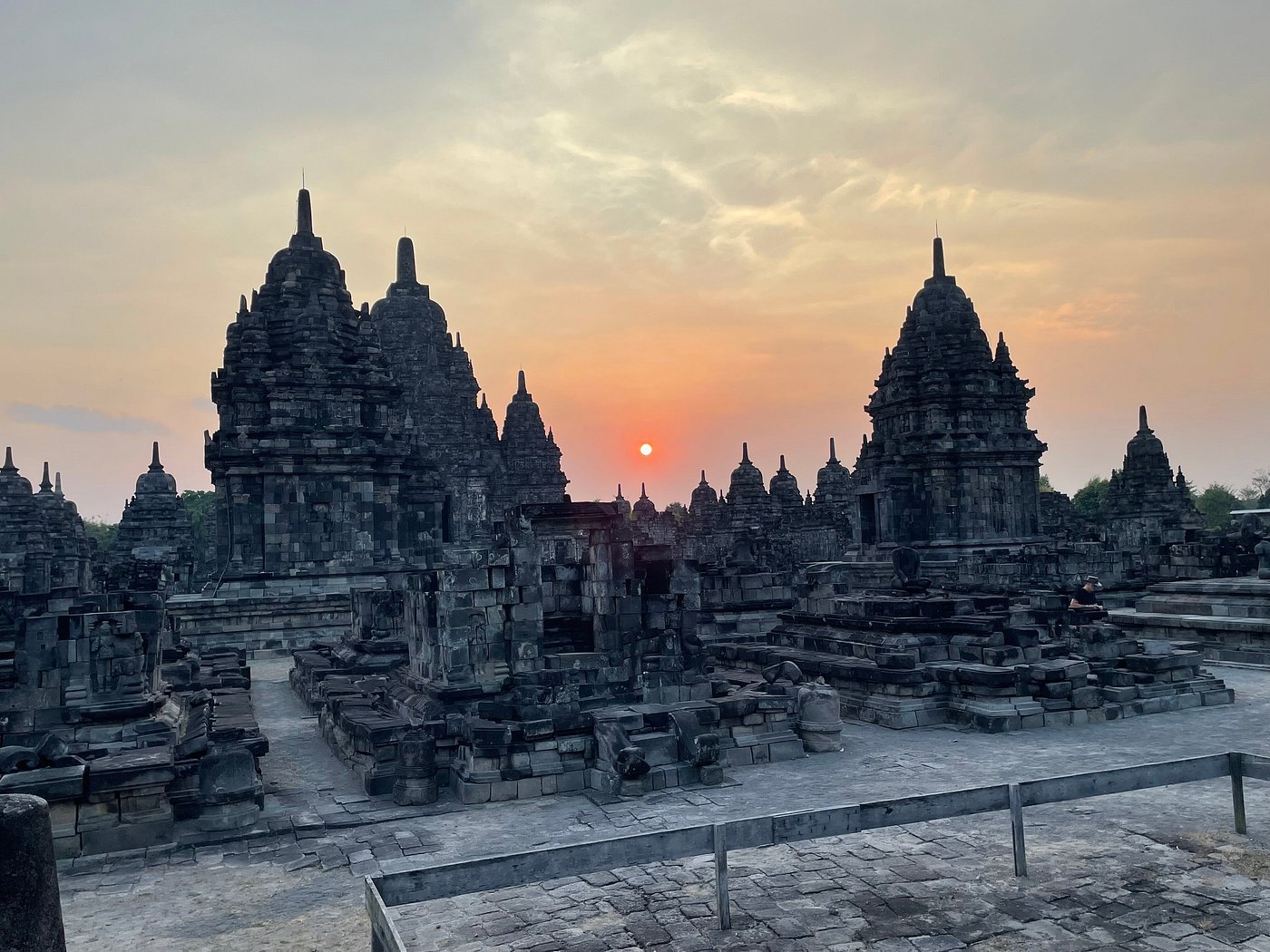
| 17:30–18:15 | Sunset | The light turns gold; day-trippers begin to leave. |
| 18:15–19:00 | Dinner | Near Prambanan, or at Rama Shinta Resto on selected packages. |
| 19:15 | Theatre entry | Find your seat before the 19:30 start. |
| 21:00 | Show ends | Return to the hotel; around 22:00 depending on traffic. |
Times are a planning guide. Sunrise access, temple closing times and the performance schedule can change; we confirm them before a booking.
Borobudur in the morning
Borobudur is the reason to start early. The temple is quieter before the tour buses arrive, the light is soft, and the walk up feels different when the terraces are not yet crowded. Sunrise access is managed separately from a normal daytime visit, so confirm the current rules before you plan around it.
If you skip sunrise, a later morning visit still works. You will see the reliefs and stupas in full daylight, but with more people and stronger heat. For a one-day combination, the sunrise slot is what gives you enough time to rest before Prambanan.
How long do you need at Borobudur?
Plan around two hours from arrival to departure, including the walk from the entrance, the temple itself and a short break. If you are photographing or reading the reliefs, add another 30 minutes. Do not plan a second major stop before Prambanan; the rest is more valuable.
Prambanan in the late afternoon
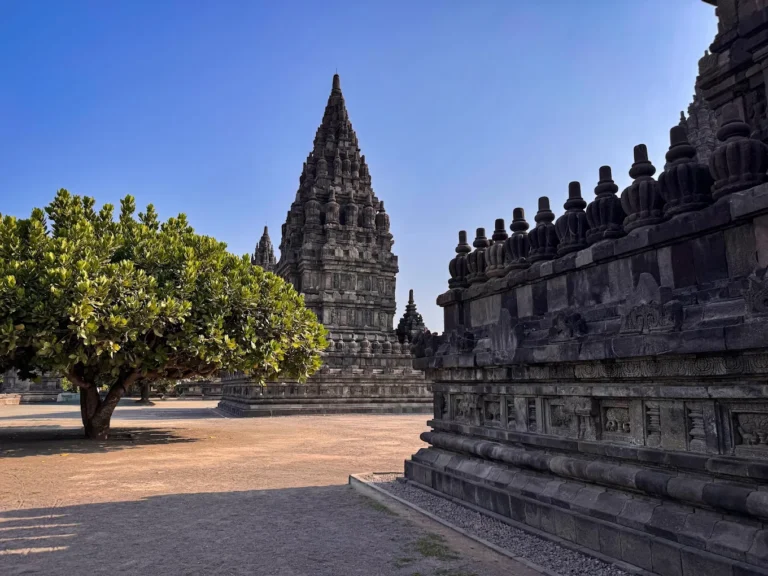
Prambanan is often visited in the middle of the day, when the stone is hot and the light is flat. Late afternoon is better: the temperature drops, the reliefs become easier to read, and the temple turns gold before sunset. It also puts you at the right side of the complex for the evening show.
Give yourself at least 1.5 to 2 hours. The three main spires are the headline, but the smaller temples around the complex — especially Sewu — are part of the experience. Many visitors rush straight to the main temples and miss the quieter corners.
Want the timing handled? Our Borobudur + Prambanan + dinner package follows this two-shift structure, with private transport and a confirmed seat for the ballet.
Tickets: why a package is often the safer route
Borobudur sunrise and the Ramayana Ballet VIP seats are limited allocations. They can sell out weeks ahead, especially in July, August, December and holiday weekends. A normal daytime ticket is not the same as sunrise access, and Prambanan temple entry is separate from the evening performance.
| Option | What you get | Watch out for |
|---|---|---|
| Official ticket-only | Entry or show ticket, no transport | Limited inventory; sunrise or VIP may already be gone; you manage the timing. |
| Our package | Ticket secured as part of the package, private car, pickup and optional dinner | Subject to confirmation; book early for sunrise and VIP. |
We are a licensed local tour operator, not the official ticket office. The ticket is bought on your behalf as part of the package, and the package price includes services beyond the ticket. If you already have a ticket and only need transport, the transport-focused package covers that.
If the official page shows sold out, ask us before you change your dates. We will check the current allocation and tell you honestly what is possible.
Transport: private car vs public transport
For this specific day, a private car is the practical choice. You start before public transport is useful, move between two temple areas, and finish after the show when ride-hailing can be slow and surge-priced. A driver also handles parking and the restaurant-to-theatre transfer.
Public transport can work for Prambanan on its own, and a train or bus is a reasonable city-to-temple option if you have a full day for one site. For Borobudur before dawn plus Prambanan at night, the connections add too much uncertainty.
If you only need the evening ride, the transport-focused package is the simpler option. For the full day, compare the dinner package with the no-dinner version.
Is it too rushed? Who should split it
The day is long, but it is not necessarily rushed. The difference is the rest. If you keep the afternoon break, you can enjoy both temples and the show without feeling like you are chasing a schedule.
Consider splitting the temples across two days if:
- You are travelling with children under five or anyone who needs a slower pace.
- You have a flight on the same evening or a very early departure the next morning.
- You want to climb, photograph or study the reliefs without time pressure.
- You are visiting in the rainy season and want a weather buffer.
A two-day version is simple: Borobudur in the morning on Day 1, Prambanan and the ballet on Day 2. You lose the “two temples in one day” badge, but you gain a much more comfortable trip.
What to bring and wear
Wear comfortable shoes with grip. The stone steps and uneven paths are not a place for smooth soles. Bring a light layer for the pre-dawn start, sun protection for the afternoon, and a rain jacket if you are visiting between November and April.
For the temple sites, dress respectfully: covered shoulders and knees are a safe default. Check the current photography and drone rules at each site; they can differ and may change.
Dinner and the Ramayana Ballet
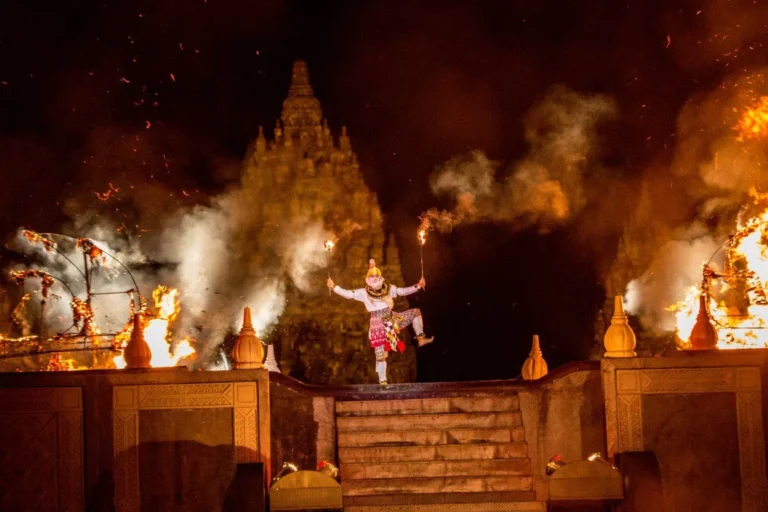
Dinner fits between sunset and the show, but do not cut it too close. If you eat near Prambanan, allow time to return to the theatre, park and find your seat. On selected packages, dinner is at Rama Shinta Resto; on the no-dinner package, you can eat independently and meet the driver at the theatre.
The performance usually starts at 19:30 and lasts about 90 minutes. Seat classes — VIP, Special and First — differ in position and inclusions. The seating guide explains the trade-offs; the schedule page has the current show days.
Budget: what changes the price
The main variables are seat class, private car, sunrise access, dinner and the number of people travelling. A couple sharing a car will pay less per person than a solo traveller with a private guide. A dinner package costs more than a no-dinner package, but it removes the restaurant logistics on a tight evening.
Use the product pages for current starting prices and inclusions. For an exact quote, send your date, group size and hotel area; availability is confirmed before payment.
Best time of year for this combination
May to October is the dry-season window, when the Ramayana Ballet is usually performed outdoors and the temple grounds are at their most predictable. November to April is the rainy season; the show usually moves indoors, and afternoon storms can slow the drive between the temples. The combination still works, but keep the evening flexible and avoid a same-night flight.
July, August and December are the busiest periods. Book the show date and the sunrise access earlier, and expect more traffic around Prambanan in the late afternoon.
A note on crowds and photography
Borobudur sunrise is popular for a reason, but it is not a private monument. Arrive with the group, follow the site’s walking rules, and do not block the terraces for photos. Tripod and drone rules can differ from normal visiting hours; check them before you carry the equipment.
Prambanan is busiest from mid-afternoon until sunset. The crowd thins after the day-trippers leave, which is another argument for staying through the golden hour instead of rushing back to the city.
FAQ
Can I visit Borobudur and Prambanan in one day?
Yes, if you start before dawn and rest in the afternoon. A private car makes the timing much easier. It is a long day, not a relaxed one.
Is sunrise at Borobudur included in a normal ticket?
Not necessarily. Sunrise access is often managed separately; confirm the current product and entry time before booking.
Can I use one combined ticket for both temples?
Some combined products exist, but they may not include sunrise access or the Ramayana Ballet. Tell us what you want to see and we will confirm what the package includes before payment.
How long does the day take?
Plan from about 03:30 to 22:00, including the rest, both temples, dinner and the show. Traffic can add time.
Is it suitable for children?
Older children usually manage; very young children may find the pre-dawn start and late finish difficult. Splitting the temples across two days is easier.
What if it rains?
Outdoor performances may move indoors. The official ticket provider decides whether the show continues; we follow their policy and keep you informed.
Plan the one-day version
Send your date, group size and hotel area. We will check the sunrise access, the show schedule and the seat class before suggesting a package.
References
- UNESCO World Heritage Centre — Borobudur Temple Compounds.
- UNESCO World Heritage Centre — Prambanan Temple Compounds.
- InJourney — Borobudur ticket reference.
- InJourney — official Ramayana Ballet schedule reference.
- Visiting Jogja — Yogyakarta tourism information.
- TripAdvisor — public guest reviews of Prambanan and Ramayana Ballet tours.