Ratu Boko Temple: History, Sunset and How to Visit
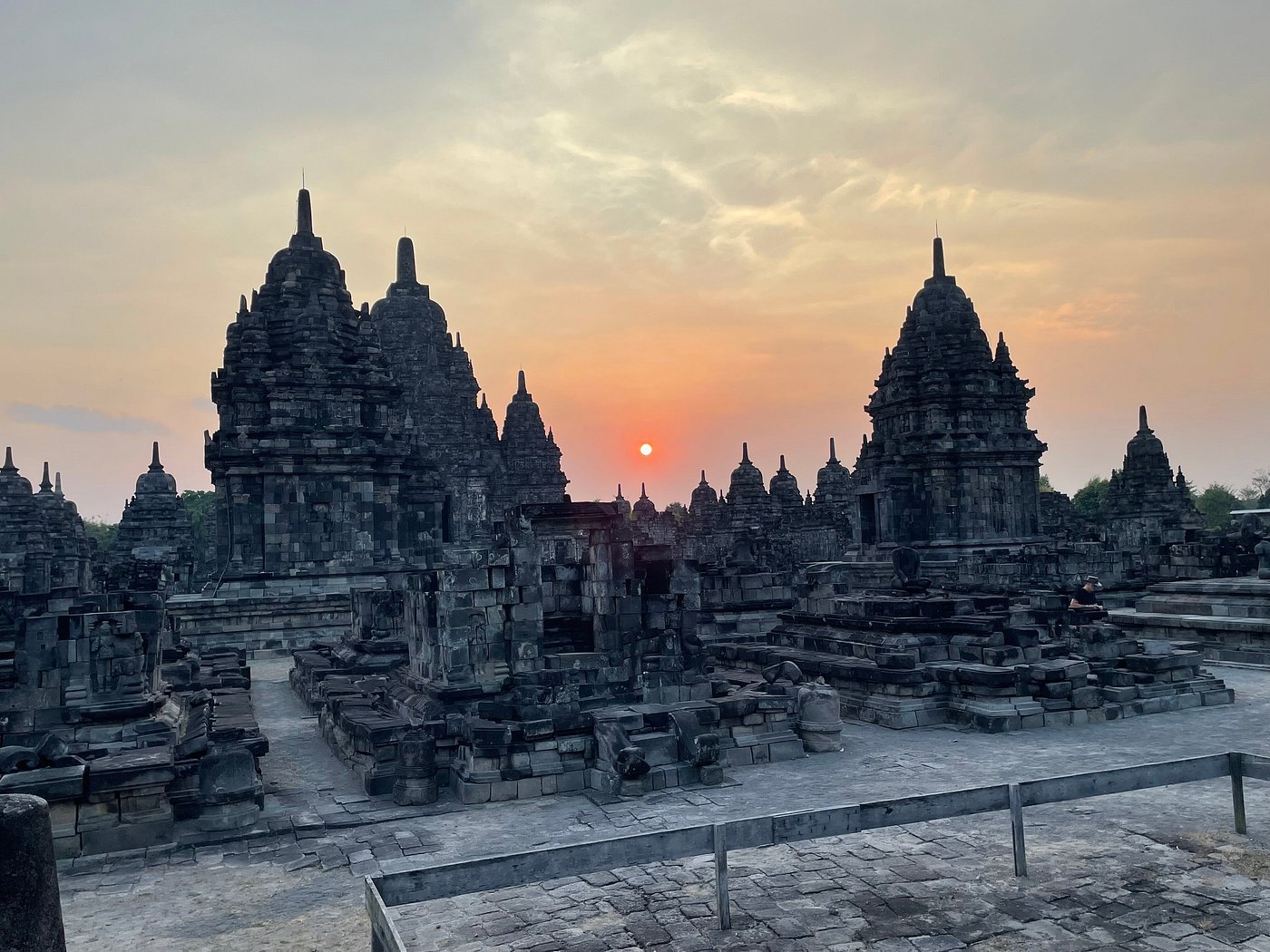
It is not a temple, and it is not a quick photo stop. Ratu Boko is an 8th-century hilltop palace with a view that explains why people wait for the late light.
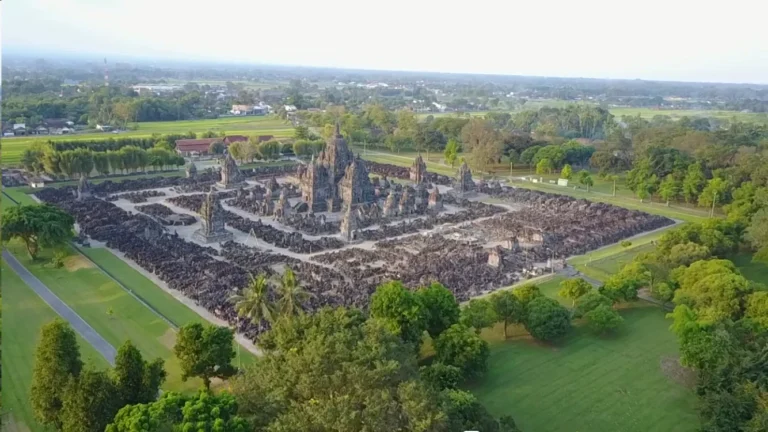
Ratu Boko is usually described as a temple, but that is not quite right. It is a palace complex: gates, halls, pools and meditation caves on a hill south of Prambanan, with a view that stretches across the plain.
The name comes from local legend, not from a confirmed king. The site is believed to date from the 8th century, during the Ancient Mataram period, and its exact role is still debated by archaeologists.
What Ratu Boko is
Ratu Boko sits on a hill about 3 km south of Prambanan, roughly 30–45 minutes from central Yogyakarta. The complex includes a main gate, a large paseban (audience hall), pools, enclosed rooms and two small caves used for meditation or spiritual practice.
There are no three giant spires here. The appeal is the combination of archaeology and landscape: you walk through the gate, look out over the plain, and understand why a palace was built on this spot.
A short history
The site is associated with the Ancient Mataram Kingdom and is thought to have been built in the 8th century. Inscriptions and architectural remains suggest it was a residential and ceremonial centre rather than a purely religious temple.
The popular story links it to Ratu Boko, a legendary king and the father of Roro Jonggrang — the princess associated with the Prambanan legend. That story is part of local culture, not a verified historical record. Treat it as legend, and enjoy it as context rather than fact.
For the official history and site description, see the InJourney Destination page linked in the references.
Hours and tickets
| What | Typical information | What it means |
|---|---|---|
| Day visit | 07:00–17:00 WIB | The normal park hours; last entry is before closing. |
| Sunset experience | Separate booking | Boko Sunset/Boko Picnic can extend beyond normal hours; confirm availability. |
| Ticket | Separate from Prambanan | A Prambanan ticket does not include Ratu Boko. |
| Location | About 3 km south of Prambanan | Easy to combine by car, not on foot along a busy road. |
Hours and packages can change for maintenance, events or private functions. Confirm before a fixed booking, especially if sunset is the reason you are going.
What to see
- The main gate — two layers of stone gate, the classic first image of Ratu Boko.
- Paseban and the hall area — the open space where ceremonies and gatherings are thought to have taken place.
- The princess pools — a bathing complex that suggests the site was residential, not only ceremonial.
- The caves — small meditation spaces; check whether access is open on the day.
- The view — the reason to come late; you can see the Prambanan plain and, on a clear day, the horizon.
Sunset and the best time
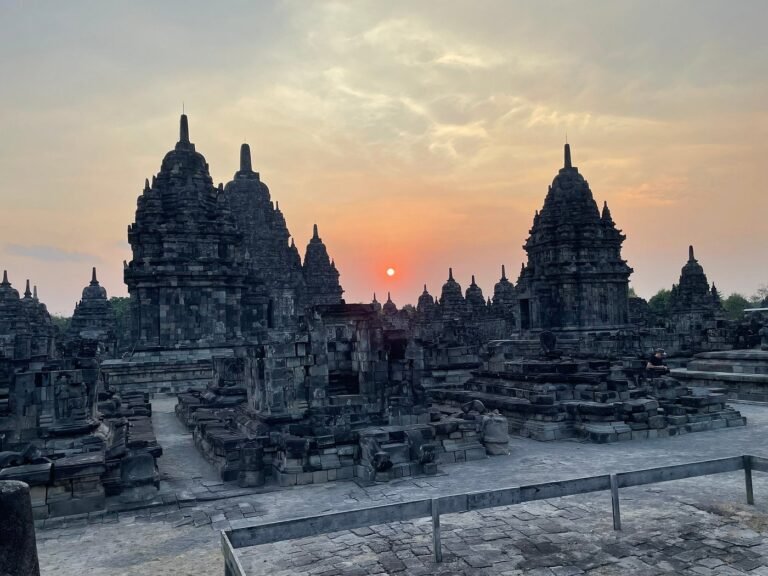
Late afternoon is the most popular time. The light turns gold, the crowds thin, and the view is at its best. But the normal park closes at 17:00, so a true sunset visit usually means a separate sunset package or event. Do not assume you can simply stay after closing.
Morning is the quieter alternative: cooler, fewer people, and better for photography of the gate without a crowd. If you are combining Ratu Boko with Prambanan, do Prambanan in the morning and Ratu Boko in the afternoon, or the reverse if the sunset package is available.
For the Prambanan timing, see Prambanan opening hours. For the sunset sequence at Prambanan itself, see Prambanan at sunset.
How to visit
The easiest way is a private car. Ratu Boko is close to Prambanan but not walkable along a safe route, and the return after a sunset experience is not the time to hunt for a ride. A driver can wait, then take you to dinner or back to the city.
If you want the transport and the Prambanan evening handled together, the Prambanan sunset + dinner package covers Prambanan, dinner and the ballet; Ratu Boko is a separate ticket and can be added as an earlier stop. For a simple transfer, the transport-only package is the base option.
Wear shoes with grip; the paths are uneven and some areas have steps. Bring water and a layer for the evening. If you are combining Ratu Boko with the ballet, leave enough time for the transfer and dinner; do not cut it close.
FAQ
Is Ratu Boko a temple?
No. It is an ancient palace complex, not a temple. The name “Ratu Boko Temple” is commonly used, but the site is better understood as a hilltop kraton.
What time does Ratu Boko open?
Usually 07:00–17:00 WIB for the normal day visit. Sunset experiences are separate bookings; confirm the current schedule.
Is Ratu Boko included in the Prambanan ticket?
No. It is a separate ticket and a separate site, about 3 km from Prambanan.
Is Ratu Boko worth it?
Yes, if you want the palace remains, the hilltop view and a quieter sunset. It is not a substitute for Prambanan’s main temples.
Can I visit Ratu Boko and Prambanan in one day?
Yes, with a private car. Do Prambanan first, then Ratu Boko for the late afternoon, or the reverse if the sunset package is available.
Is it suitable for children?
Older children usually manage; the paths and steps are uneven. Keep the visit short and avoid the hottest part of the day.
Add Ratu Boko to the plan
Tell us your date and whether you want the normal day visit or a sunset experience. We will check the current hours and how it fits with Prambanan.
References
- InJourney Destination — Ratu Boko: history and site information.
- InJourney Destination — Ratu Boko opening hours, tickets and sunset experiences.
- UNESCO World Heritage Centre — Prambanan Temple Compounds.
- Visiting Jogja — Yogyakarta tourism information.
- TripAdvisor — public visitor reviews of Ratu Boko.