Ijo Temple: The Quiet Hilltop Temple Above Prambanan
A 10th-century Hindu temple on a hill, with a view over the Prambanan plain — and opening hours that rule out the sunrise visit many blogs promise.
Ijo Temple is not the biggest temple in Yogyakarta, and that is part of why it works. It sits on a hill above the Prambanan plain, with terraces, a main shrine and a view that feels far from the tour buses.
The short answer
| What | Details |
|---|---|
| Type | Hindu candi, not a palace or a Buddhist site |
| Location | Gumuk Ijo hill, Sleman; about 4 km from Ratu Boko and 18 km east of Yogyakarta |
| Elevation | About 410 m above sea level |
| Hours | Usually 08:00–17:00 WIB |
| Time needed | 1–1.5 hours, including the view and photos |
| Best for | Quiet atmosphere, hilltop views, photography, a break from the main temple crowds |
History and setting
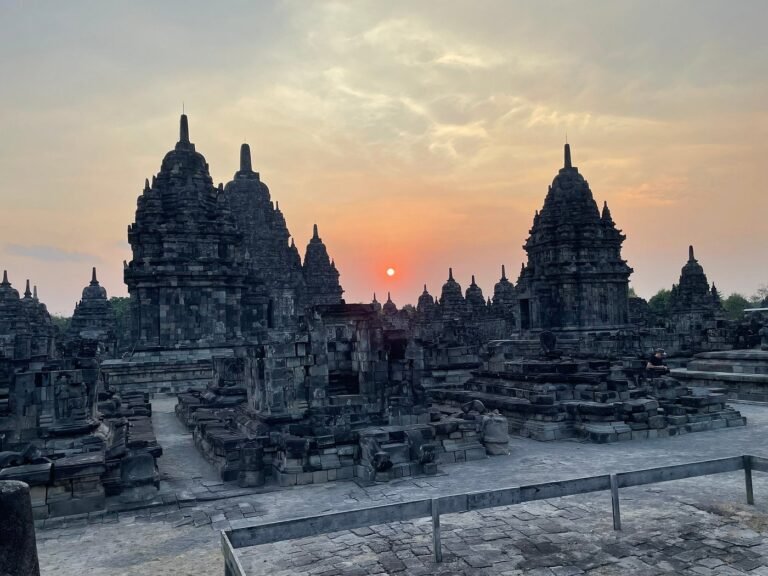
Ijo is a Hindu temple complex from the Ancient Mataram period, usually dated to around the 10th–11th century. It sits on the western slope of Gumuk Ijo, with the main temple on the highest terrace and smaller perwara temples in front of it.
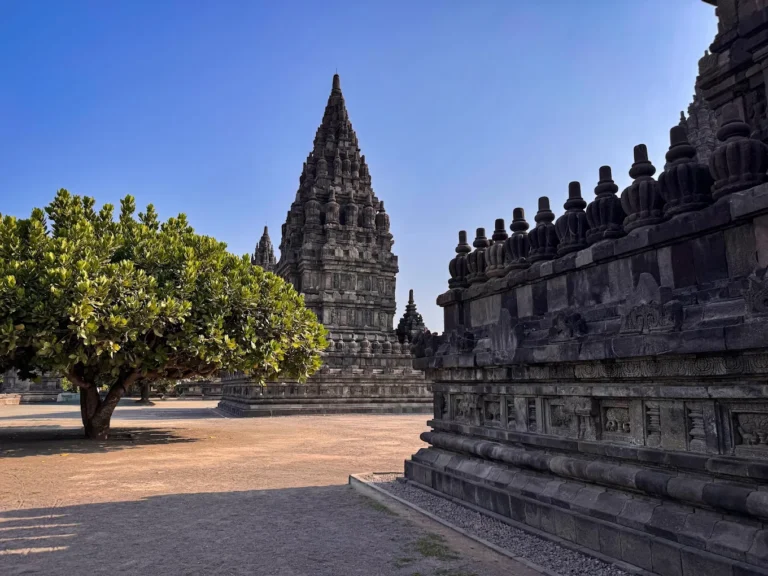
The main shrine has a square plan, a stepped roof and a central chamber with a linga and yoni — symbols of Shiva and Parvati. The three perwara temples are associated with the Trimurti: Brahma, Vishnu and Shiva. The architecture is quieter than Prambanan, but the setting is the reason many people remember it.
The hill looks west over rice fields, villages and the city. On a clear day you can see the airport and the plains beyond. That view is also why the site has become popular with photographers — even though the opening hours limit the “sunrise” stories.
Opening hours — and the sunrise myth
Ijo is usually open from 08:00 to 17:00 WIB, daily. The gate does not open before 08:00 for normal visitors, so you cannot be inside the complex for sunrise. If a tour promises “Ijo sunrise”, ask what exactly it includes: a viewpoint outside the gate, a special arrangement, or simply an early start that reaches the temple after opening.
Late afternoon is the better light window, but the site closes at 17:00 — before the sun actually sets for much of the year. You can get the softer late light and the view, but do not plan on watching the full sunset from inside unless you have confirmed a special arrangement.
Hours can change for maintenance or events. Confirm before a fixed booking, especially if you are combining Ijo with Prambanan or Ratu Boko.
What to see
- The main temple — the central shrine with its linga and yoni, and the kala-makara carvings around the niches.
- The three perwara temples — smaller shrines in front of the main temple, linked to the Trimurti.
- The terraces — the complex rises up the hill; walk slowly and look back at the view between levels.
- The panorama — rice fields, villages and the city in the distance; best in the morning or late afternoon.
- The quiet — Ijo is rarely as crowded as Prambanan; that is part of its value.
How to get there
Ijo is about 30–45 minutes from central Yogyakarta by car, depending on traffic, and roughly 10–15 minutes from Prambanan or Ratu Boko. The last stretch is a narrow uphill road; a private car with a driver who knows the route is easier than a scooter for most visitors.
There is parking at the site, but do not expect a large transport hub. Arrange the return trip before you go up, especially if you are visiting late in the day. A driver can wait while you walk the complex, then take you to Prambanan or dinner.
For a simple transfer, the transport-only package is the base option. If you want the Prambanan evening handled too, the Prambanan sunset + dinner package covers the temple, dinner and the show; Ijo would be an earlier stop, not part of that package.
Combine it with Prambanan
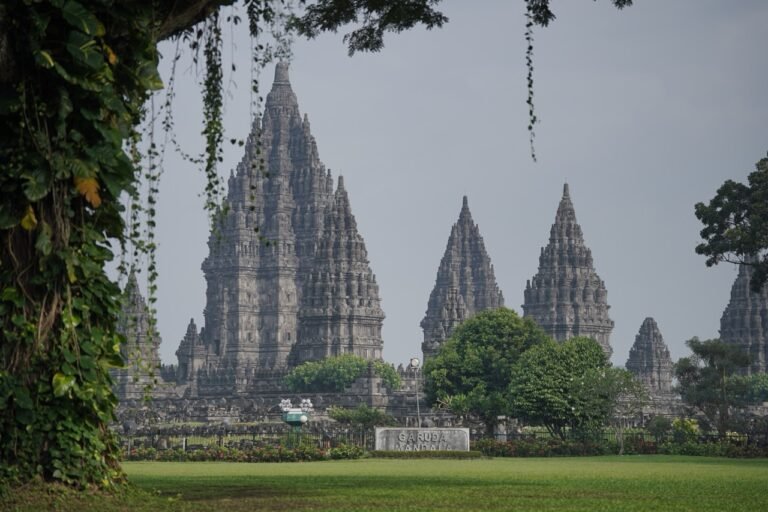
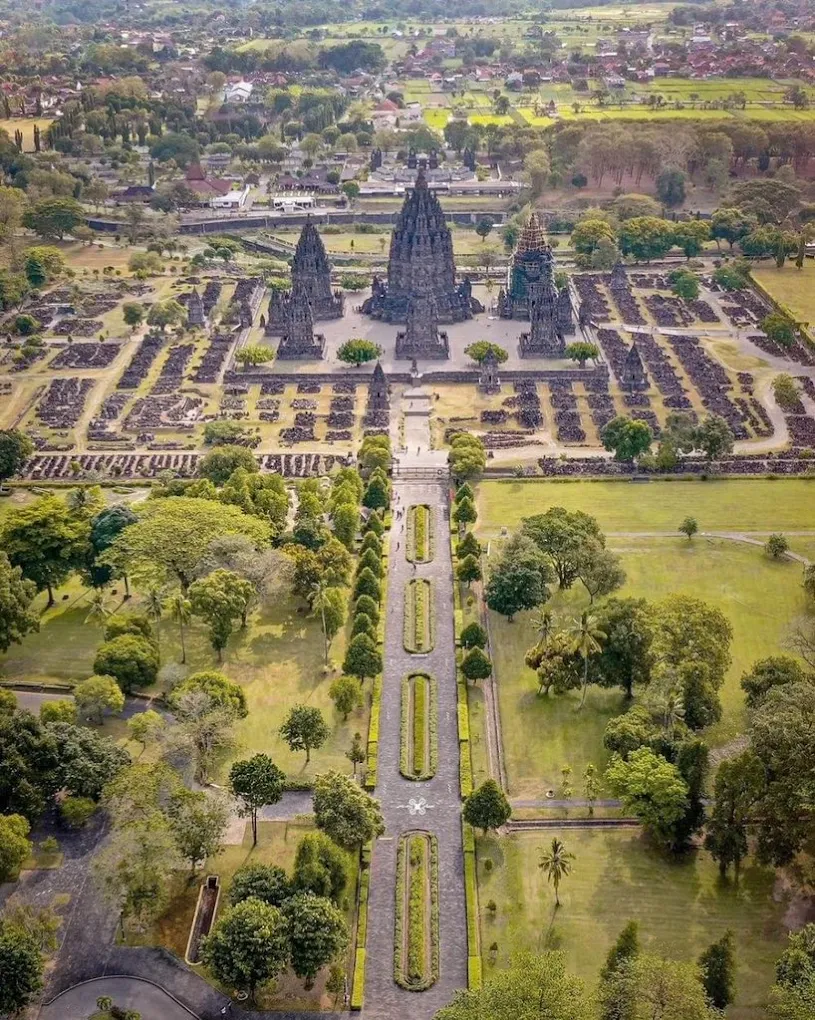
The practical pairing is Prambanan in the morning, Ijo around midday or early afternoon, then Ratu Boko or the city later. If you are seeing the ballet, keep Ijo for a different day or a morning slot; do not squeeze it between Prambanan sunset and the theatre.
Ijo is also a good alternative when Prambanan’s main temples are closed on Monday. Check Prambanan opening hours before you build the day, and read Ratu Boko if you want the hilltop palace nearby.
For the wider trip, see the 3-day itinerary or the 4-day version. Ijo fits best as a half-day add-on, not a main anchor.
FAQ
What time does Ijo Temple open?
Usually 08:00 WIB. It closes around 17:00. Confirm the current hours before a fixed booking.
Can I see sunrise at Ijo Temple?
Not during normal opening hours. The gate opens at 08:00, so a standard sunrise visit is not possible. Ask a tour operator what a “sunrise” tour actually includes.
Is Ijo Temple worth visiting?
Yes, for the hilltop setting, the quiet and the temple architecture. It is not a substitute for Prambanan’s main temples.
How far is Ijo from Prambanan?
About 10–15 minutes by car, roughly 4 km from Ratu Boko and 18 km east of Yogyakarta.
Is Ijo suitable for children or older visitors?
The terraces and uneven paths require some walking and steps. It is manageable for most people who can walk slowly, but not ideal for limited mobility.
Does it cost extra?
Yes, Ijo has its own entrance fee, separate from Prambanan. Confirm the current price on site.
Add Ijo to the route
Tell us your date and whether you want a half-day temple run or a full Prambanan evening. We will check the current hours before you book.
References
- RRI — Candi Ijo: hilltop setting and 08:00–17:00 hours.
- Wikipedia — Ijo Temple: location, dating and architecture.
- UNESCO World Heritage Centre — Prambanan Temple Compounds.
- Visiting Jogja — Yogyakarta tourism information.
- InJourney Destination — Ratu Boko and the Prambanan area.