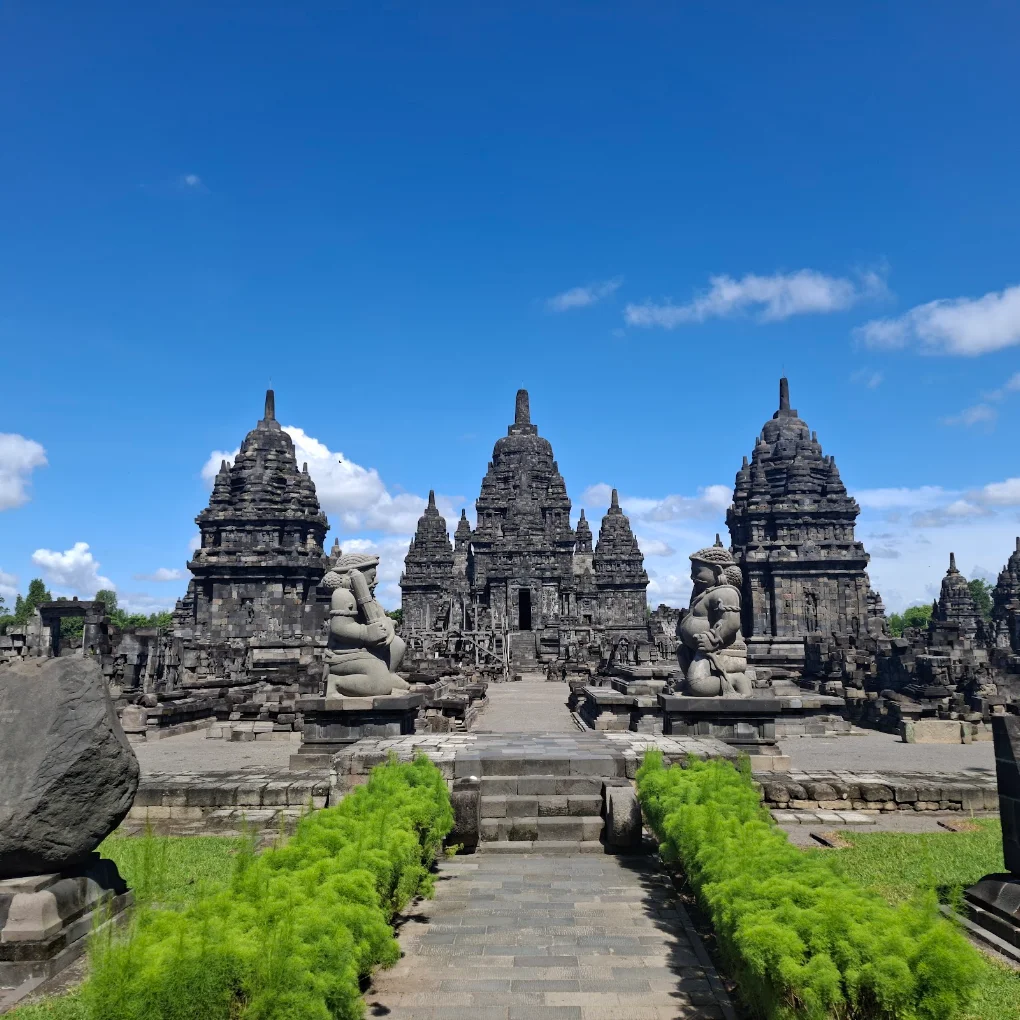
Sewu Temple: The Quiet Buddhist Temple Next to Prambanan
Most people walk straight past it. Sewu is 800 metres from Prambanan, included in the same ticket, and often the calmest part of the visit.
Sewu is the second-largest Buddhist temple complex in Indonesia after Borobudur, and it sits almost in the shadow of Prambanan. That combination makes it one of the easiest — and most underrated — add-ons in Yogyakarta.
The short answer
| What | Details |
|---|---|
| Type | 8th-century Mahayana Buddhist temple complex |
| Location | About 800 m north of Prambanan, in the Prambanan archaeological park |
| Tickets | Included with the Prambanan entrance ticket; no separate Sewu ticket |
| Time needed | 45–90 minutes, more if you photograph or walk the perwara rows |
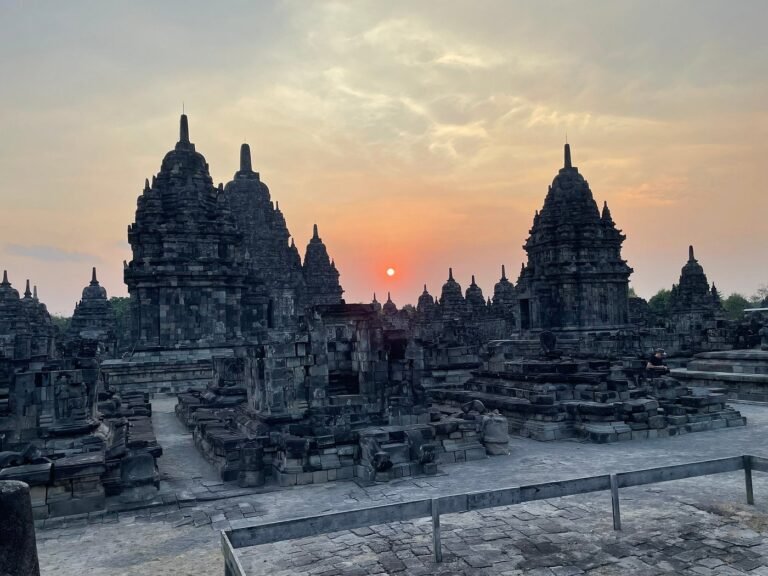
| Best time | Early morning or late afternoon; Monday is a useful alternative when the main Prambanan temples are closed |
| Best for | Quiet architecture, Buddhist history, photography, avoiding the main crowd |
History
Sewu dates from the 8th century and is associated with the Sailendra/Mataram period. Its original name was probably Manjusrigrha — “the house of Manjusri” — based on the Kelurak and Manjusrigrha inscriptions. Manjusri is the bodhisattva of wisdom in Mahayana Buddhism.
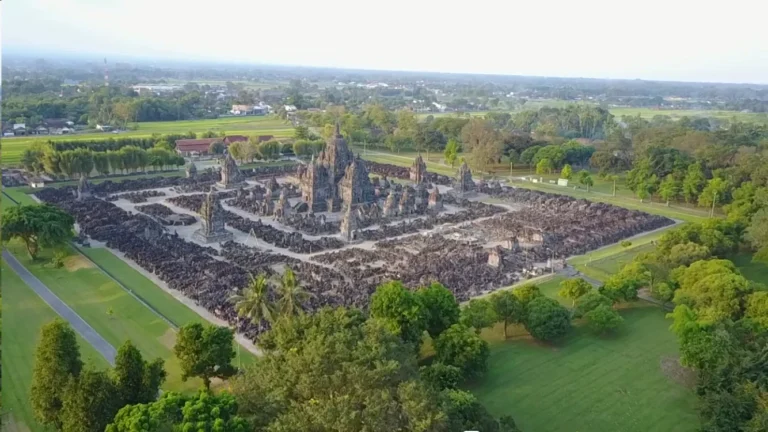
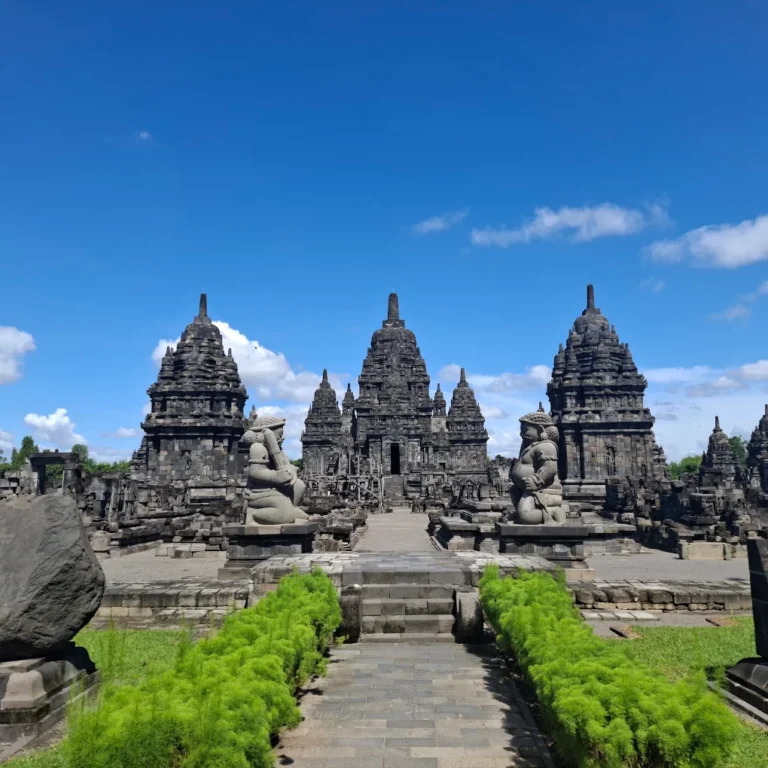
The complex has 249 buildings arranged in a mandala pattern: a central main temple surrounded by rows of smaller perwara temples. The layout represents the Buddhist cosmos, and the four entrances are guarded by dvarapala statues. The scale is easy to underestimate from the path; walk the rows and it becomes clear.
Sewu predates Prambanan by more than 70 years and Borobudur by about 37 years. It was a royal Buddhist temple in the Prambanan plain, and its proximity to the Hindu Prambanan complex is one of the more interesting details of the area: the two traditions coexisted here, not in separate worlds.
What to see
- The main temple — the central shrine, with its stepped roof and carved niches.
- The perwara rows — 240 smaller temples in concentric rows; many are ruins, but the pattern is the point.
- The dvarapala guardians — the large entrance statues; replicas are also found at the Yogyakarta Kraton.
- The mandala layout — best seen by walking to the outer rows and looking back at the centre.
- The quiet — Sewu is usually less crowded than Prambanan, especially in the morning.
Tickets and hours
Sewu is inside the Prambanan tourist area, so you do not need a separate ticket. Access is included with the Prambanan entrance fee, along with Lumbung and Bubrah. That makes Sewu the cheapest “extra temple” in the area: you already paid for it.
The park generally opens early and closes in the late afternoon. For the exact ticket-counter and temple-area times, see Prambanan opening hours; the two sites share the same park, but not every gate or area closes at the same minute.
Photography is allowed; drones and commercial shoots need permission. Wear shoes with grip, bring water, and expect uneven stone in the outer rows.
How to visit
From the main Prambanan complex, Sewu is about 800 metres north — a 10–15 minute walk, or a short ride on the park’s golf car/Tayo shuttle. Walking is the better experience if the heat is manageable: you pass the outer temples and see the complex emerge from the trees.
The practical sequence is Prambanan first, then Sewu, then Lumbung and Bubrah if you still have energy. If you are seeing the ballet, leave Sewu by late afternoon so you have time for dinner and the theatre. The Prambanan sunset + dinner package covers the main temple, dinner and the show; Sewu is included in the same park, but check the timing with your driver. For a transfer-only option, the transport package is the base.
If you want the full context, read Prambanan at sunset and Ratu Boko for the nearby hilltop palace.
Sewu on a Monday
Every Monday, the three main Prambanan temples are closed for maintenance, but Zone 2 — including Sewu, Lumbung and Bubrah — remains open. That makes Monday a good day for Sewu, especially if you want the Buddhist complex without the main Prambanan crowd.
Do not book a Monday tour expecting the three main spires. If Prambanan is the priority, move it to another day and use Monday for Sewu, Ratu Boko or a city day. The opening-hours guide explains the closure.
Who should add Sewu?
Add Sewu if you like Buddhist architecture, walking between smaller shrines, or photography without a crowd. It is also a good choice for families who want a shorter, less overwhelming temple visit than Prambanan’s main courtyard.
Skip it if you are short on time and only want the three iconic Prambanan spires, or if walking on uneven stone in the heat is difficult. The main paths are manageable, but the outer rows are not a polished museum floor.
FAQ
Is Sewu Temple included in the Prambanan ticket?
Yes. Sewu is inside the Prambanan tourist area; access is included with the Prambanan entrance ticket. There is no separate Sewu ticket.
How far is Sewu from Prambanan?
About 800 metres north of the main Prambanan temples — a 10–15 minute walk or a short shuttle ride.
Is Sewu open on Monday?
Yes. The three main Prambanan temples are closed on Monday, but Zone 2, including Sewu, Lumbung and Bubrah, remains open.
How long should I spend at Sewu?
45–90 minutes. Add more time if you want to walk the perwara rows or photograph the mandala layout.
Is Sewu quieter than Prambanan?
Usually yes, especially in the morning. It is not empty, but the crowd is smaller and the atmosphere is calmer.
Can I visit Sewu and Ratu Boko in one day?
Yes. Sewu is in the Prambanan park; Ratu Boko is a short drive south. A private car makes the combination easy.
Add Sewu to the Prambanan visit
Tell us your date and whether you want the temple only or the temple plus the ballet. We will check the Monday closure and the park timing before you book.
References
- InJourney Destination — Sewu ticket inclusion, location and Monday access.
- Wikipedia — Sewu: history, Manjusrigrha and the 249-temple mandala.
- UNESCO World Heritage Centre — Prambanan Temple Compounds.
- Visiting Jogja — Yogyakarta tourism information.
- TripAdvisor — public reviews of temples in the Prambanan area.