Best Time to Visit Yogyakarta: Month-by-Month Guide
Dry-season mornings, rainy-season crowds, and the months that quietly give you the best balance of weather, price and space.
The best time to visit Yogyakarta is usually May, June or September: dry enough for the outdoor Ramayana Ballet, less crowded than July and August, and comfortable enough for temple mornings.
But “best” depends on what you value. If you want the outdoor show and clear mornings, aim for the dry season. If you want fewer tourists and do not mind afternoon rain, the wet season can be rewarding — and the ballet moves indoors.
The short answer
| If you want… | Go in… | Why |
|---|---|---|
| The outdoor Ramayana Ballet | May–October | The Open Air Theatre is the default in the dry season. |
| Fewer crowds | November–early December, February–March | Wet weather keeps some travelers away; the show moves indoors. |
| The clearest temple mornings | June–September | Lower rainfall and cooler nights, though July–August are busy. |
| The best overall balance | May, June, September | Good weather without the peak-season crush. |
| The cheapest trip | Shoulder and wet months, outside holidays | Lower demand, but check the rain and the show venue. |
The data
Yogyakarta has a tropical monsoon climate. The table below uses long-term monthly averages for the area around Yogyakarta: high/low temperature and rainfall. Treat the numbers as a planning guide, not a forecast.
| Month | High / low (°C) | Rainfall (mm) | What it feels like |
|---|---|---|---|
| January | 31 / 24 | 199 | Wettest stretch; humid; short heavy showers. |
| February | 31 / 24 | 184 | Still wet; greener landscape; fewer crowds. |
| March | 32 / 24 | 181 | Wet, warm; rain often in the afternoon. |
| April | 32 / 24 | 166 | Transition; hot, with improving mornings. |
| May | 32 / 24 | 94 | Drier; a strong shoulder month. |
| June | 32 / 23 | 81 | Dry, comfortable nights; good value. |
| July | 32 / 23 | 64 | Dry and busy; book early. |
| August | 33 / 22 | 54 | Driest feel; peak crowds; cool nights. |
| September | 33 / 22 | 59 | Dry, hot; quieter than July–August. |
| October | 34 / 23 | 69 | Hottest average; build-up to the rains. |
| November | 33 / 24 | 131 | Wet season begins; indoor show returns. |
| December | 32 / 24 | 183 | Wet and busy around the holidays. |
Averages are approximate and vary by source and location. The show venue can change by season; confirm the current schedule before booking.
Month by month
January–March. This is the wettest period. Rain often arrives in the afternoon or evening, so plan temple visits for the morning and keep the afternoon flexible. The landscape is green, the light is soft, and the crowds are thinner than in July. The Ramayana Ballet usually moves indoors, so the evening is less weather-dependent than the temple day.
April–May. The transition. April can still be wet and hot; May is usually drier and one of the best-value months. The outdoor show returns, but the peak-season crowds have not arrived. This is a good window for Borobudur, Prambanan and a few city days.
June–August. The classic dry season. Mornings are clearer, the outdoor theatre is the default, and the coast is more predictable. July and August are also the busiest months, especially around school holidays; book the show and the sunrise allocation early.
September–October. Still dry, but hotter. September is quieter than August; October is the hottest average month and the build-up to the rains. If you can handle the heat, this is a good shoulder window with fewer people than mid-summer.
November–December. The wet season returns. November is usually wetter than October but less busy before the holidays; December combines rain with peak holiday travel. The indoor show is a reliable fallback, and the temples are quieter on wet mornings.
Best time for the Ramayana Ballet
If the outdoor performance matters, aim for the dry season. The Open Air Theatre uses the illuminated temples as a backdrop; in the rainy season, the show usually moves to the indoor Trimurti Theatre. The indoor version is comfortable and weather-proof, but it is a different experience.
The show runs on selected nights, usually Tuesday, Thursday and Saturday at 19:30. Check the current schedule before fixing your dates. VIP seats are limited, so book the show before the hotel if the date is non-negotiable. The Prambanan sunset + dinner package includes the temple, dinner and the show in one booking.
For the venue comparison, see Prambanan vs Purawisata; for the best seats, see the seating guide.
Best time for the temples
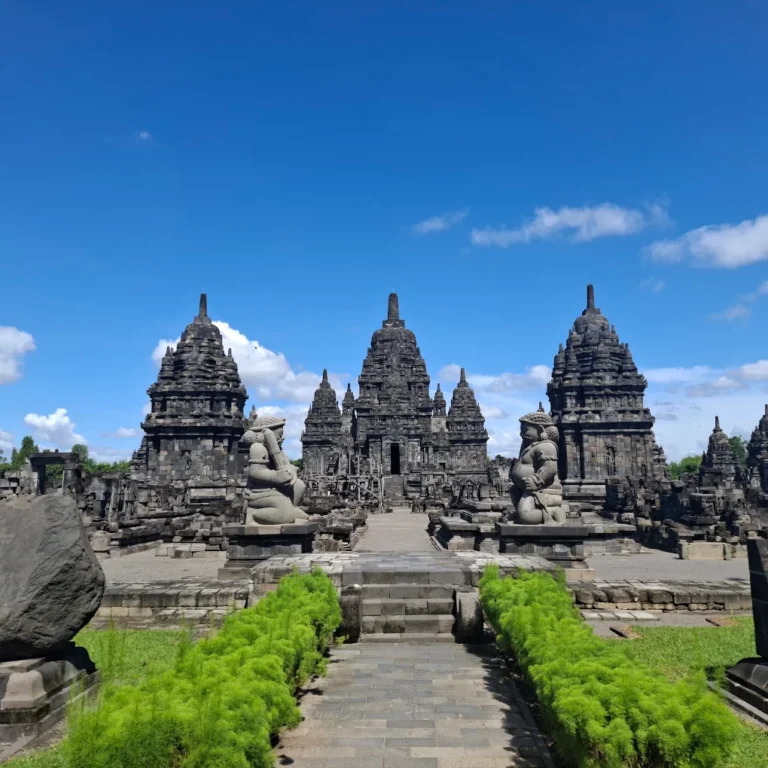
Borobudur is best early, before the heat and the day buses. The dry season gives you a better chance of a clear horizon, but sunrise is never guaranteed. In the wet season, mornings can still be clear; the rain often comes later.
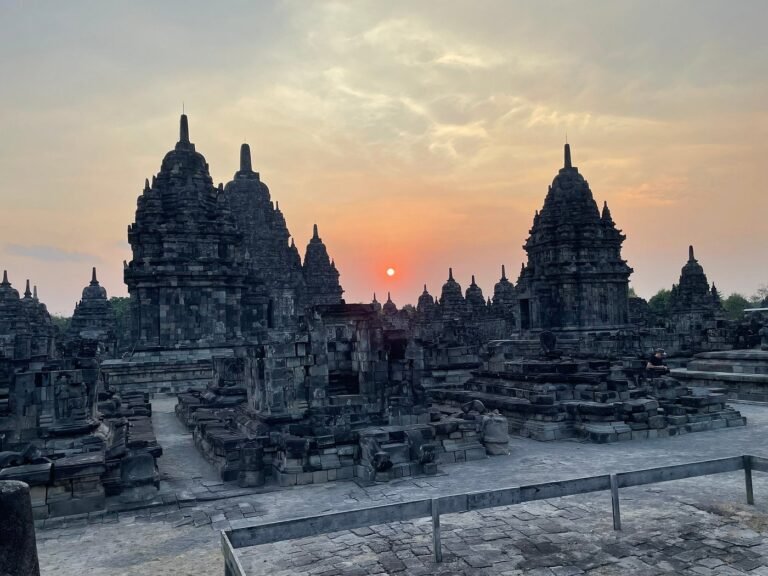
Prambanan is best in the late afternoon, especially in the dry season when the sunset and the outdoor show line up. In the wet season, go earlier and keep the evening flexible.
If you are combining both, read Borobudur and Prambanan in one day; the Borobudur + Prambanan + dinner package covers the long day in one booking. If you are choosing a trip length, the how-many-days guide is the practical starting point.
Crowds and prices
July, August and December are the busiest. Indonesian school holidays, Christmas/New Year and the dry-season reputation all push demand up. Weekends are busier than weekdays at Prambanan and Malioboro.
Shoulder months — May, June, September — usually give you the best balance of weather and space. The wet season is cheaper and quieter, but you need to accept afternoon rain and the indoor show.
FAQ
What is the best month to visit Yogyakarta?
May, June and September usually offer the best balance: dry enough for the outdoor show, but less crowded than July and August.
Is the rainy season a bad time to visit?
No. It is quieter and greener, and the ballet moves indoors. Expect afternoon rain and keep the temple days flexible.
When is the Ramayana Ballet outdoors?
Usually in the dry season, roughly May–October. Confirm the current schedule and venue before booking.
What is the hottest month?
October is the hottest on average, with highs around 34°C. Humidity is high year-round.
When are the fewest crowds?
Outside July, August, December and major holidays. February–March and early November are usually quieter.
Should I book the show before the hotel?
Yes, if the show date is fixed. The ballet does not run every night, and VIP seats are limited.
Match your dates to the season
Send your dates and the experience you want — outdoor show, sunrise, coast or a quiet temple morning. We will tell you what the season makes possible.
References
- Time and Date — Yogyakarta climate and monthly averages.
- Weather2Travel — Yogyakarta weather by month.
- BMKG — Indonesian meteorological agency.
- Visiting Jogja — Yogyakarta tourism information.
- InJourney — official Ramayana Ballet schedule reference.